Palitana: Home to 900 Incredible Jain Temples in Gujarat
ByTT Bureau
2024-04-25
Palitana in Gujarat is a revered pilgrimage hub, boasting over 900 Jain temples atop Shatrunjaya Hill, each a masterpiece of intricate marble carvings and devout spiritual heritage.
India is indeed a religious and spiritual nation, here country, people of more than twelve religions believe in approximately 33 million Gods. That is the reason the country is justifiably referred to as the spiritual heart of the universe. India has prominent temples found across the quietest corners and rough hilly terrains such as Sabarimala in Kerala and Vaishno Devi in Jammu & Kashmir.
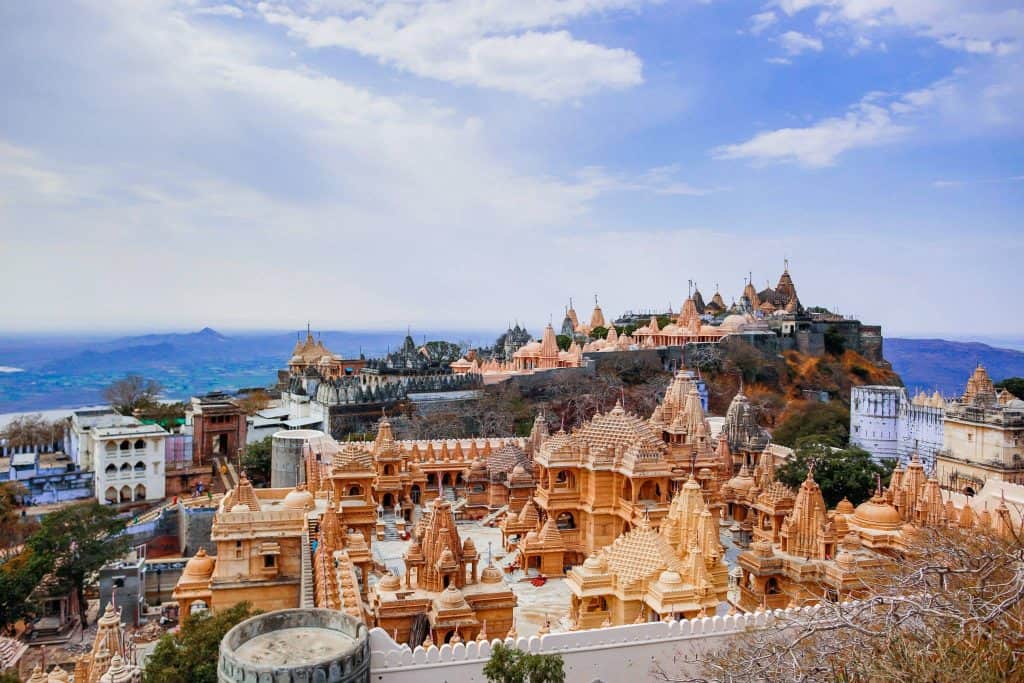
Shatrunjaya Peak in Palitana, Gujarat is another such mountain not one but 900 temples. These temples, made primarily of marble, represent an incredible feat of devotion and architectural prowess. This pilgrimage is considered one of the most sacred in Jainism, with the hill itself believed to be sanctified by visits from Adinath, the first Tirthankara, and other spiritual leaders.
Palitana temples
This sacred destination in Gujarat‘s Bhavnagar district is a city with 900 temples distributed throughout Shatrunjaya Mountain. It covers around 20 acres of land and has nine hilltops. The well-organized temple complex, a tirtha (holy spiritual location) of the Jain community, was created by Jain forefathers during the 11th and 20th centuries.
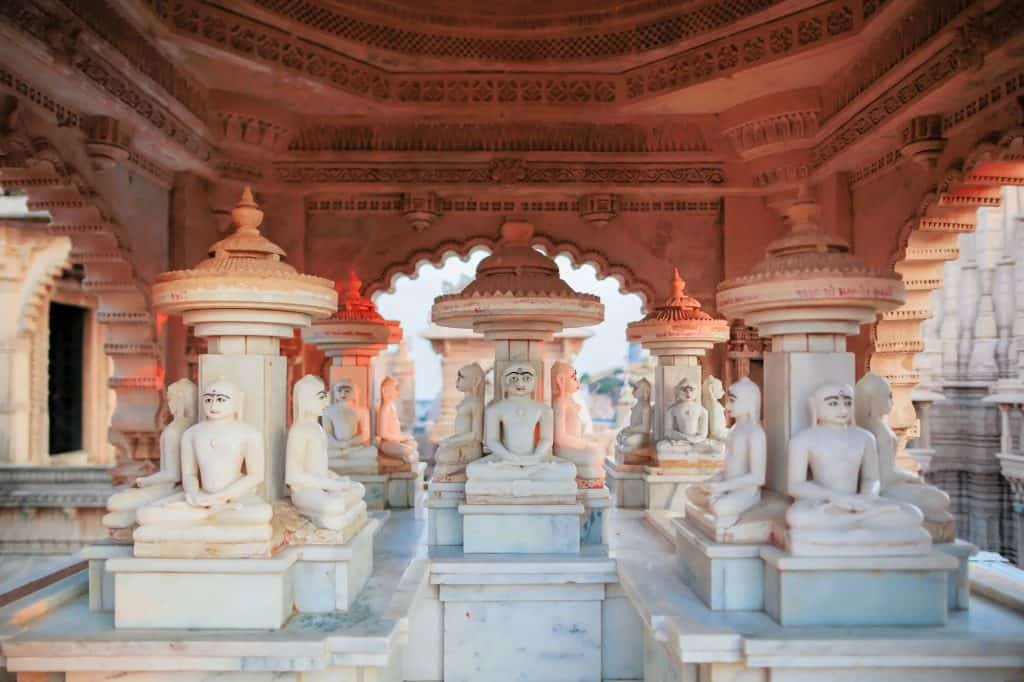
The notion that the mountain has been bestowed by 23 Tirthankaras is responsible for this unwavering loyalty and devotion (Tirthankaras who have attained a complete state of nirvana and guide others to find the same, as per Jain mythology).
The temples are composed of marble and display the incredible architectural skill of past craftsmen. With their exquisite carvings, jewel-encrusted sculptures, stunning idols, and towering walls around them, the temples appear to be a mix of vast European mansions and formidable Indian monuments.
Almost every tourist here, whether a Jainism adherent or not, agrees that the 3.5-kilometre upward trek on Shatrunjaya mountain is an otherworldly journey. The cluster of well-ordered and magnificent 900 temples is a view not to be skipped. It takes almost 3,750 stone stairs to get there which adds to the spectacular encounter.

Most days, thousands of devotees attempt the journey. Especially during Kartik Purnima, which symbolizes the conclusion of Chaturmas, a four-month time of religious retreat, pilgrims are seen in huge numbers.
Once you reach there, the major entrance, Ram Pole, is to the left, but the finest sights are to the right, where you can witness the Gulf of Cambay on a sunny day. One passage within the Nav Tonk Gate leads left to the shrine of Angar Pir, a Muslim prophet who defended the sites during a Mughal invasion.
The Chaumukhji Tunk, located to the right, houses the Chaumukh (Four-Faced Shrine), which was established in 1618 by a Jain trader. Adinath, the first Jain Tirthankar (assumed to have acquired enlightenment here), is represented with images facing the four cardinal points. You could simply spend a few hours up here roaming through the hundreds of temples. The Adinath Temple, on the highest altitude on the far (south) side, is the largest, perhaps one of the most spectacular and significant sites with a great amount of exquisite sculpture.
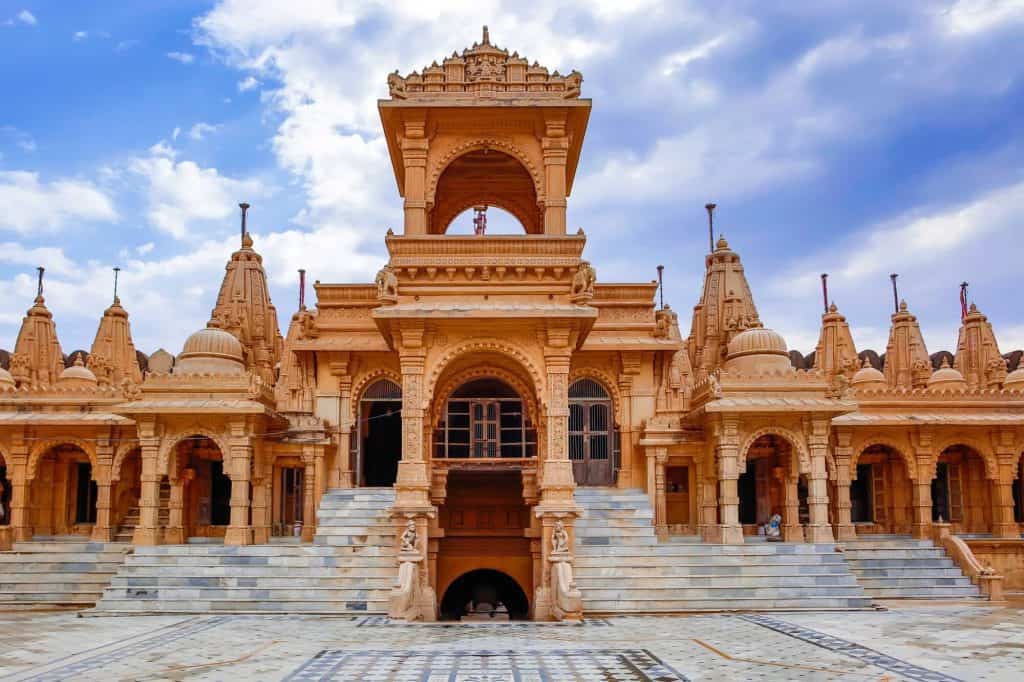
This temple is popular not only with Jains but also amongst Hindus and Muslims. On top of the peaks, there lies a little Siva shrine. Muslims also visit here to pray at Angar Peer Baba’s Dargah. Angar Peer Baba, a Sufi saint, is revered as Palitana’s rescuer.
History of the Palitana temples
The Palitana temples on Shatrunjaya Hill were constructed over 900 years beginning in the 11th century. The first temples in this location were erected by Kumarpal Solanki, a famous Jain devotee. The temples were demolished by Turkish Muslim invaders in 1311 AD when the shrines were ruled over by the monk Jinaprabhasuri, who was 50 years old, but they were eventually reconstructed to their splendour.
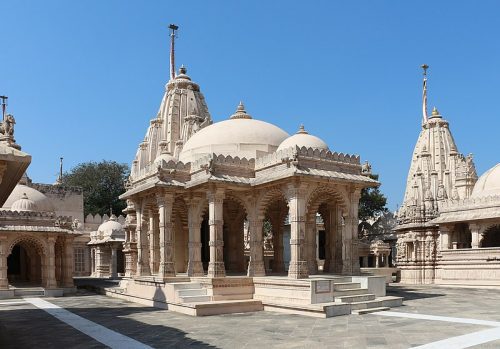
Following that, Jain temples were constructed again in the area. Over time, the location became a major spot for Jain pilgrims from around the globe. Palitana was formally recognized as the world’s first fully vegetarian community in 2014. It also holds the distinction of being the only hillside city to have a thousand temples.
The most notable temple complex is dedicated to the first Jain Tirthankar, Rishabhanatha of Jainism’s 24 Tirthankaras. His name is derived from his mother’s 14 fortunate dreams wherein a bull (Rishabha) arrived before his birth. Foreign tourists are only permitted to access the main temple compound.
How to reach Palitana
- You may go to Ahmedabad by train or plane (airports in Ahmedabad and Bhavnagar) and then call a taxi to Palitana town in the Bhavnagar district.
- Rest at Dharamshala, which is around 5-10 minutes from Shatrunjaya Hill. They offer their on-time Jain food options.
- From October through March, it is the best time to come. During the monsoon season, the yatra is closed for four months.
Some tips to remember while visiting Palitana temples
- Wear traditional or complete attire as a mark of respect toward Jain culture.
- Bring enough water for your hike.
- You can’t eat anything on the hill, so eat a little before you start climbing.
- You might climb without shoes or footwear, therefore, wear protective socks.
- After you return, recharge yourself with sugar water (Sakar nu paani) or sugarcane juice at a booth (Bhatu Ghar) near the Taleti, which is complimentary for all the devotees.
- Taking photographs inside the temple is against the law.
- Pilgrims are not permitted to bring food into the temple.
- Everyone, even the priests, is required to return by sunset.
- It is forbidden to slaughter animals for food in this location since meat is outlawed. The selling of eggs or chicken is prohibited. The region belongs mostly to Jain. The prohibition occurred as a result of a hunger strike by Jain priests seeking an end to the usage of meat, which they believe is against their ideas and traditions.
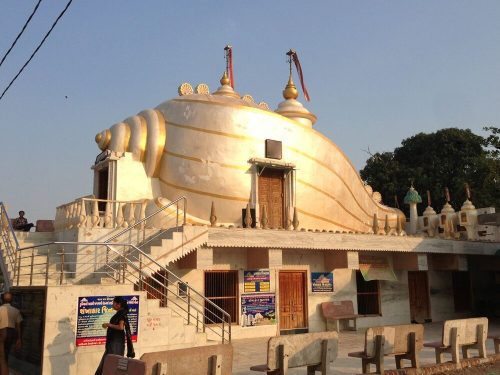
Reflecting on the hill, home of serenity and harmony with the ability to purify one’s soul and pave the route to Moksha. It is appropriate to refer to it as a magical creature that one must visit once in their lifetime.
As the world’s largest and only mountainous complex entirely dedicated to temples, the place embodies the spirit of ancient traditions and enduring faith, making it an essential destination for anyone seeking to experience the profound sanctity and historical depth of Indian religious practices.
These temples in Gujarat stand as a monumental testament to the depth of Jain devotion and architectural brilliance. This sacred site not only offers a pathway to spiritual elevation but also showcases the rich cultural heritage of India. The painstakingly carved marble structures, set against the backdrop of Shatrunjaya Hill, provide a breathtaking panorama that attracts pilgrims and tourists alike.
Read more: Latest