Onam Festival: A rich 10-day tapestry of Culture, Legend, and Celebration in Kerala
ByKamal Gill
2023-08-17
Onam, often referred to as the ‘Harvest Festival’ of Kerala, is a vibrant 10-day-long celebration that showcases the rich culture, heritage, folklore, and culinary delights of the region.

Image Credit: Sivavkm, CC BY-SA 3.0 via Wikimedia Commons
For travellers who wish to immerse themselves in the authentic Indian cultural experience, Onam offers an unparalleled mosaic of colours, flavours, and stories.
History and Legend
Onam traces its roots to ancient Indian mythology. At the heart of the Onam celebration is the tale of King Mahabali, a benevolent demon king who once ruled Kerala. His reign was a golden era, marked by prosperity, equality, and happiness. However, the gods, feeling threatened by Mahabali’s growing popularity, sought the help of Lord Vishnu.
Disguised as Vamana, a dwarf Brahmin, Lord Vishnu approached Mahabali and asked for land that could be covered in three strides. The generous king agreed, only to watch in astonishment as Vamana grew into a gigantic form, covering the Earth and the skies in two steps. For the third step, the humbled Mahabali offered his own head, pushing him into the netherworld. Touched by the king’s humility, Vishnu granted him a boon – to visit his beloved subjects once a year. Onam celebrates this annual return of King Mahabali.
Activities and Celebrations
Thripunithura Athachamayam
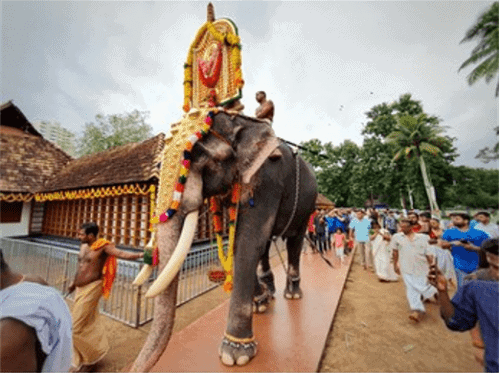
Heralding the start of the Onam festival, the Thripunithura Athachamayam is a majestic procession that marks the triumphant entry of the legendary King Mahabali into the town of Thripunithura, near Kochi in Kerala. This parade is a vibrant display of the state’s cultural heritage, showcasing an array of traditional dance forms, including Kathakali, Theyyam, Kummattikali, and many more. Apart from dances, you can also witness intricate floats, musicians playing ethnic instruments, and people dressed in traditional outfits, all culminating in a jubilant celebration of Kerala’s rich history and folklore.
Pookkalam
Derived from the Malayalam words ‘Poo’ meaning flower and ‘Kalam’ meaning artwork, Pookkalam is a traditional floral design that families create at the entrance of their homes during Onam. The practice is similar to Rangoli in North India but uses flowers instead of coloured powders. Each day of the Onam festival sees a new layer or design added to the Pookkalam, making it more elaborate and intricate. Traditionally, the design starts with just a single flower and evolves daily, symbolizing the growth and vibrancy of life. The arrangement usually depicts either a chariot, a lamp, or motifs related to Onam myths.

Image Credit: Challiyan at Malayalam Wikipedia, CC BY-SA 3.0 via Wikimedia Commons
Onam Games
The games, known as Onakalikal, form an integral part of Onam festivities. They are a reflection of the martial spirit and sportsmanship of the people.
- Vallamkali (Boat Races): Held on the Pampa River, these are magnificent snake boat races. Teams of rowers sync to the rhythmic chants and the beat of drums, creating a spectacle that draws audiences from all over the world.
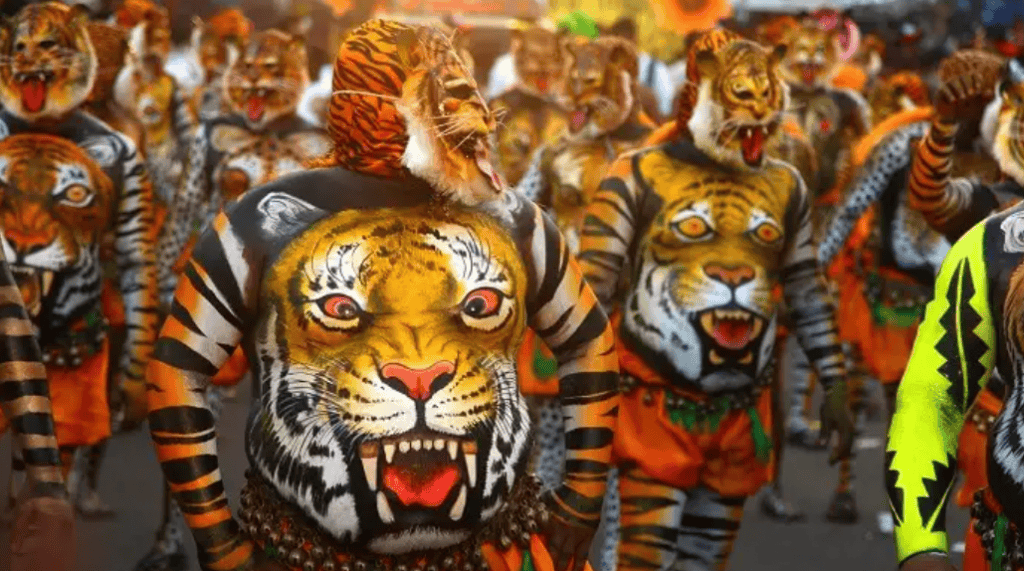
- Pulikali (Tiger Dances): Performers paint their bodies like tigers and dance to traditional beats. The transformation is remarkable, as the streets come alive with prowling ‘tigers’ in a display of vigour and vibrancy.
- Onathallu (Martial Arts): This is a display of Kerala’s traditional martial art form, Kalaripayattu. Men face off in mock combats showcasing their agility, strength, and martial skills.
While these and many other activities make the Onam 10-day calendar full of happenings a special mention needs to be made of the spectacular Snake Boat Race event which takes place on the fifth day of the Onam.

Image Credit: Arun Sinha from India, CC BY 2.0 via Wikimedia Commons
The Snake Boat Race, or Vallam Kali, is one of the most exhilarating events during the Onam festival in Kerala. Held on the backwaters of this southern state, the race features long, slender boats, known as ‘Chundan Vallams’, that resemble snakes, hence the name. These boats, with their raised prows, can accommodate over 100 rowers, and the sight of them rhythmically paddling in unison to the beat of drums is a visual and auditory spectacle.
Crowds throng the riverbanks to cheer for their favourite teams, creating an atmosphere filled with excitement and competition. Historically rooted in ancient local disputes where kings and chieftains would display their strength on the waterways, the Snake Boat Race has now transformed into a symbol of community unity and pride. The blend of raw power, teamwork, and rhythm make it an unmissable event for anyone visiting Kerala during Onam.
Onam Sadya
One of the highlights of Onam is the sumptuous feast called Onam Sadya. The Onam Sadya is the pièce de résistance of the festival. Served on a banana leaf, this vegetarian meal is a gastronomic delight comprising over 26 dishes:

- Sambar: A mix of vegetables in tamarind and lentil gravy.
- Avial: A thick blend of vegetables, coconut, and yoghurt.
- Pachadi: A sweet and tangy curry made from pineapple or bitter gourd and yoghurt.
- Parippu Curry: Lentil curry is typically served with ghee.
- Rasam: A tangy tamarind-based soup.
- Olan: White gourd and beans in a coconut milk gravy.
- Kalan: Yogurt-based curry with yam and plantain.
- Thoran: A dry dish made with finely chopped vegetables such as beans, carrots, or cabbage, cooked with grated coconut.
- Payasam: A sweet pudding made from rice, lentils, or vermicelli.
The meal is traditionally consumed without any cutlery, using one’s hands. Starting with salt on the left of the leaf and ending with a sweet Payasam on the right, the layout of the dishes follows a particular order, with each dish having its own significance.
Whether it’s the grandeur of the Thripunithura Athachamayam, the artistry of Pookkalam, the sportsmanship of Onakalikal, or the culinary wonders of the Onam Sadya, these traditions ensure that Onam is celebrated with unparalleled fervour and enthusiasm.
The Vibrant Dances of Kerala: The Grand Carnival of Onam
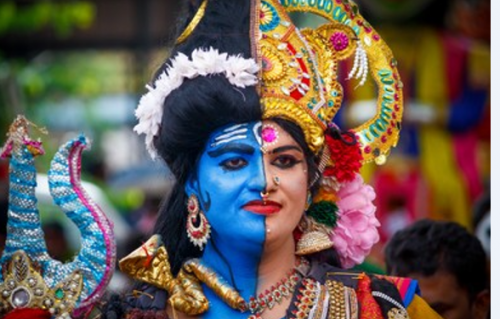
As the 10-day festival of Onam unfolds, it brings with it a riot of colours and dances that showcase the very essence of Keralite traditions. The spotlight, however, falls largely on the traditional dances of Kerala that stand out as mesmerizing spectacles.
Kathakali
With its intricate costumes, detailed make-up, and grand storytelling, Kathakali is often the first thing that comes to mind when thinking of Kerala’s dance forms. Originally a temple art form, it has now found its place on the world stage. The stories are from the Mahabharata and Ramayana, but it’s not just about the tale; it’s the dramatic representation. The Kathakali performer uses exaggerated facial expressions, detailed gestures, and intense footwork to narrate a story, making it a visual treat for the audience.

Kaikottikali (or Thiruvathirakali)
Primarily performed by women, Kaikottikali is a dance form that reflects the grace and elegance of the Keralite woman. Dressed in traditional white sarees with golden borders, women form a circle and dance gracefully, clapping their hands to the rhythm. This dance narrates tales of love and devotion and is a celebration of feminine energy.
Thumbi Thullal
Another dance form predominantly performed by women, Thumbi Thullal is a highlight during Onam. With simplicity at its core, it sees a solo performer sitting in the centre, singing and clapping, while other women dancers encircle her, moving and swaying to the rhythm. The central theme is often about love, separation, and reunion.
Kumattikali
Masks are central to Kumattikali. Performers don colourful masks, representing the faces of deities, heroes, or mythical figures. The dance is more spontaneous, with performers dancing their way through villages, amusing local people with their antics. This street dance is often light-hearted and comedic, providing much-needed levity during the intense Onam celebrations.
Pulikali (Tiger Dance)
Imagine the streets of Kerala resonating with the beats of percussion, while performers painted as tigers and hunters dance to the rhythm. Pulikali, or the tiger dance, is a visual extravaganza. It celebrates bravery and wild spirit. Watching the ‘tigers’ prance and pounce around, one can almost forget that these are just men with painted bodies and not the wild feline creatures from the jungle.
While the dances listed here are the pillars of the celebration, they are but a fragment of the beauty and richness the festival brings.
Religious Significance
While Onam’s story revolves around the legendary King Mahabali, the festival holds a significant place in Hinduism. Temples hold special prayers, and the boat races, in their own way, are an offering to the God of the Sea for a bountiful harvest.
Traditional Dress
Men wear white dhotis with a golden border, known as Mundu, while women adorn themselves in white saris with a golden border, known as Kasavu. The attire is complemented by gold jewellery, especially for women.

Image Credit: 2140768 avalinlincon, CC BY-SA 4.0 via Wikimedia Commons
Onam isn’t just a festival; it’s a kaleidoscope of the history and traditions of Kerala, beckoning travellers to partake in its celebrations. In essence, Onam is a grand spectacle, a cultural extravaganza, and an immersive experience.
FAQs
- When is Onam celebrated?
- Onam is based on the Malayalam calendar and usually falls in August-September.
- Is Onam celebrated only in Kerala?
- While primarily a Keralite festival, the celebrations can be found across India and among Malayali communities worldwide.
- Can tourists participate in the celebrations?
- Absolutely! Tourists are warmly welcomed and often invited to join in the festivities and feasts.
For travellers seeking a deep dive into India’s cultural fabric, Onam promises a journey that is both transformative and memorable.
Read more: Latest