Golden Stitches: The Unique and Alluring Art of India’s 1 and Only Zardozi
ByTT Bureau
2024-04-25
Explore the rich heritage of Zardozi, India’s traditional art of gold and silver embroidery, embodying centuries of craftsmanship and cultural pride.
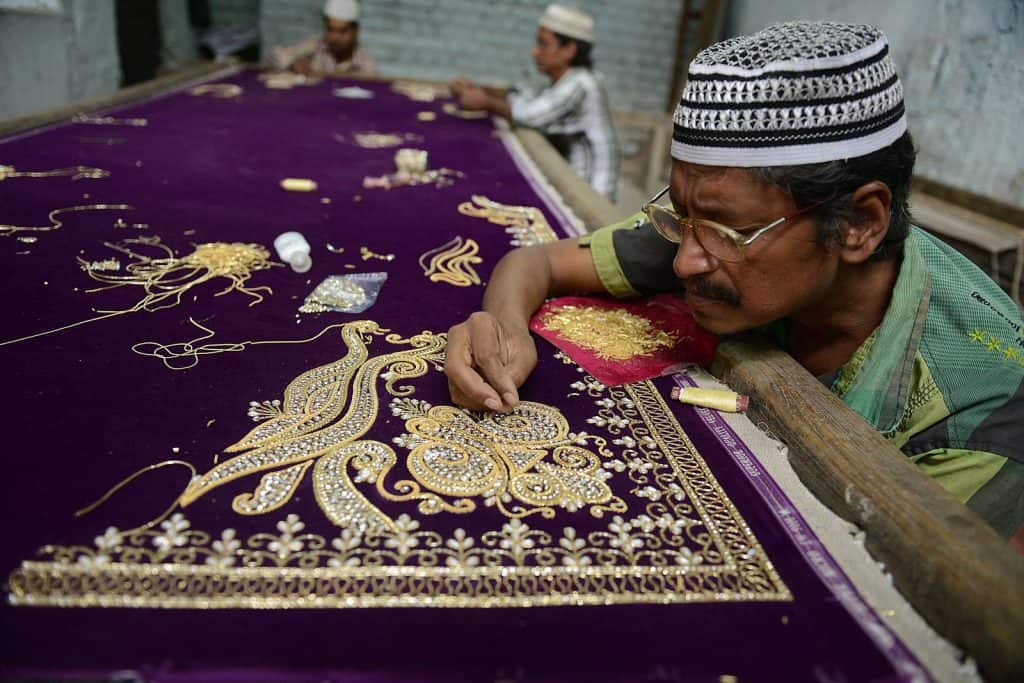
Zardozi is a common form of needlework in Iran and the Indian subcontinent. The term zardozi originates from two different Persian words Zar or Zarin, which means “gold,” and dozi, which means “sewing.” Zardozi is a style of heavy and intricate metal embroidery that is often done on a fabric foundation of silk, satin, or velvet.
Zardozi embroidery is a stunning kind of metal embroidery that was once used to beautify the clothing of Indian kings and other members of India’s royal family. In addition to that, it was used in the decoration of the walls of the royal tents, as well as scabbards, wall hangings, and equipment for the royal elephants and horses.
An important part of zardozi embroidery is making complicated patterns with gold and silver threads. The work is made even more magnificent by the pearls and precious gems that are set into it at irregular intervals. Since the time of the Rig Veda, India has been home to the intricate needlework technique known as zardozi.
The usage of zari embroidery as a decoration on the clothing of gods is mentioned in several different historical accounts. Initially, the stitching was completed with wires made of pure silver and leaves made of actual gold. However, modern-day artisans now employ a mix of copper wire that has been polished to a golden or silver finish and silk thread in their work.
This is because there is a much-reduced availability of gold and silver on a scale comparable to that of the past.
History of Zardozi Embroidery in India
Zardozi is a kind of needlework that originated in Persia and reached its pinnacle in the 17th century when it was supported by the Mughal Emperor Akbar. The lack of royal sponsorship that occurred under Aurangzeb’s administration was a major factor in the subsequent deterioration of the craft.
Craftsmen couldn’t finish the embroidery process on their own because the raw materials were so expensive and hard to come by. In search of employment, a great number of artisans left Delhi and travelled to the royal courts of Rajasthan and Punjab. Another obstacle was thrown in the path of the craft when the 18th and 19th centuries saw the rise of industrialisation. After India got its independence in 1947, the government did not do anything to promote Zari embroidery.
Making of Zari
To be skilled in the trade, one must not only have excellent stitches, but one must also have an awareness of the fundamental procedures that are used to construct them. Zari is a flattened wire made of either silver or gold that is twisted around a silk thread to create intricate embroidered designs.
Zardos are responsible for the creation of stunning patterns that shine out like a peacock on a cloudy day. These designs include inspiration from Persian art, and as a result, the primary sources of inspiration for the themes are flowers and climbing plants.
In addition to the thread itself, the frills are what give the work of zardozi its additional splendour and opulence.
Pearls, precious stones, and silk thread not only offer a touch of colour but also give the design a regal sheen and a sense of opulence.
In contrast to the majority of traditional embroideries, the artisans who work on these garments need a pattern that is first sketched on butter paper, and then chalk powder and kerosene oil are used to trace the design onto the fabric that will be stitched. The fabric is then spread out on a wooden frame called an adda, which is quite similar to the khatiya that is used in the countryside.
After this step has been completed, around 6-7 of them divide the pattern into sections and begin the process of embroidering with zari in each section.
In contrast to the majority of traditional embroideries, the artisans who work on these garments need a pattern that is first sketched on butter paper, and then chalk powder and kerosene oil are used to trace the design onto the fabric that will be stitched.
The fabric is then spread out on a wooden frame called an adda, which is quite similar to the khatiya that is used in the countryside.
After this step has been completed, around 6-7 of them divide the pattern into sections and begin the process of embroidering with zari in each section.
When working with Zari, a tiny hook needle is required to create the rapid chain stitches.
A finger is used to hold the thread on the underside of the cloth, and an aari, which is a needle that resembles an awl but has a sharp tip, is used to hold the thread on the top of the fabric.
A single pull on a loose thread might cause the whole pattern to unravel in a matter of minutes, which can signal catastrophe for the project.
The alternative method involves using a regular needle to secure the stitches, which is both time-consuming and costly.
Zardozi uses many different types of stitches, such as chain, surface satin, and couching, depending on what the design needs.
Like any other kind of hand needlework, Zari embroidery takes some time to complete.
Evolution of Zardozi
The zardozi art form has had an incredible resurgence in popularity throughout the previous half-century. This needlework has not only made its way into trendy boutiques, but it is also making a comeback in the world of interior design, home décor, and extravagant weddings.
The materials used now may not have the same elegance as those used by the Mughals, but the work is done to satisfy the need for highly adorned clothing embellished with sparkling beads and sequins. In the most recent versions of zardozi embroidery, which are being made in different parts of the country right now, there is a lot of intricate gold threadwork.
Where to buy
Old Delhi’s marketplaces have several tiny lanes with shops.
Kinari Bazar has zari zardozi embroidery.
Bombay Beads Centre, a large emporium for beads and sequins, supplies zari embroidery. It’s Asia’s biggest such store.
Despite these changes, zardozi remains a symbol of luxury and cultural pride, embodying a historical continuum that highlights the artistic prowess and rich cultural heritage of its regions.
Thus, zardozi not only preserves a decorative tradition but also carries forward a legacy of intricate artistry and cultural significance, making it a timeless jewel in the crown of textile arts.
Read more: Latest